When homeowners plan a kitchen upgrade, they often focus on appearance and durability. However, maintenance is just as important when selecting kitchen countertops. A surface that requires less care can save time and effort in daily life. Because of this, many people compare quartz vs granite countertops before making a final decision. Both materials are strong and stylish, yet they differ in how much sealing and regular care they need. Therefore, understanding these differences can help homeowners choose the most practical surface for their kitchens.
Understanding How Quartz Countertops Work
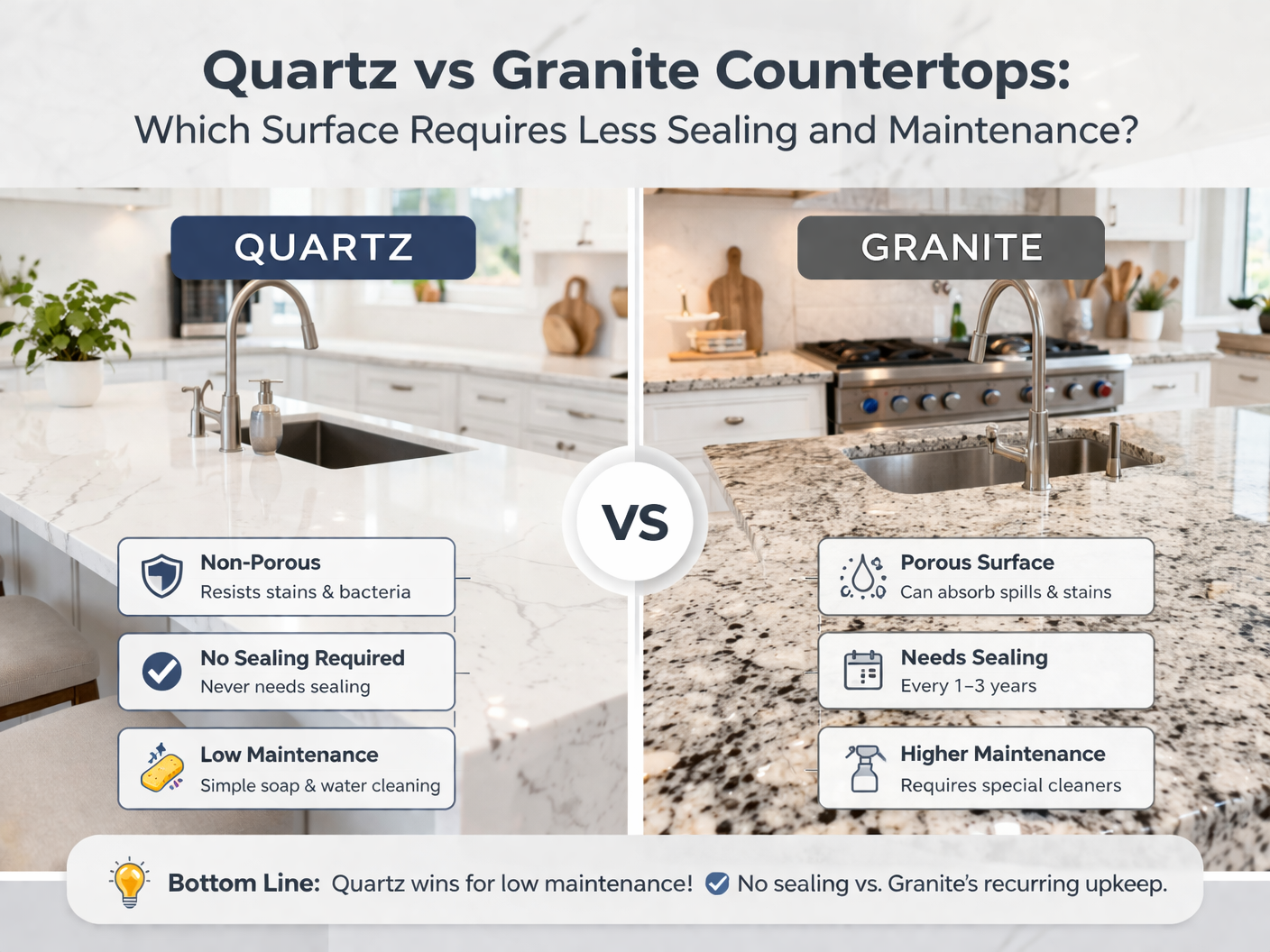
Quartz countertops are engineered surfaces made from natural quartz crystals combined with resin. As a result, the surface becomes non-porous and smooth. Because it does not contain natural pores, quartz usually does not require sealing. This feature makes it a convenient choice for busy households. Additionally, spills from coffee, sauces, or oils are less likely to soak into the surface. For this reason, many homeowners prefer quartz kitchen countertops for their low-maintenance benefits.
Another advantage is the easy cleaning routine. Most of the time, wiping the surface with mild soap and water is enough to keep it clean. Furthermore, quartz maintains its shine without special treatments. Because of these qualities, quartz surfaces often appeal to homeowners who want attractive kitchen countertops that do not require frequent upkeep.
Why Granite Needs Periodic Sealing
Granite countertops, on the other hand, are natural stone surfaces formed over thousands of years. While granite is strong and beautiful, it naturally contains small pores. Because of this, granite surfaces usually require sealing to protect them from stains and moisture. Sealing creates a protective layer that prevents liquids from entering the stone.
However, the sealing process is not overly complicated. In most cases, homeowners only need to reseal granite once every year or two. Still, compared with quartz, granite requires slightly more attention. Therefore, when discussing quartz vs granite countertops, maintenance is one of the key differences many homeowners consider.
Comparing Durability in Everyday Use
Durability also plays an important role in choosing kitchen countertops. Many homeowners often ask, is quartz or granite more durable for daily kitchen activities? In reality, both materials are known for their strength. Quartz resists stains and scratches very well because of its engineered structure. Meanwhile, granite offers strong heat resistance and natural hardness.
Because of these characteristics, both materials perform well in active kitchens. However, quartz tends to win in terms of convenience because it does not require sealing. Therefore, when comparing quartz vs granite countertops, the maintenance level often becomes the deciding factor rather than durability alone.
Choosing the Right Countertop for Your Lifestyle
Ultimately, the best choice depends on how much maintenance a homeowner is willing to manage. Quartz surfaces are ideal for people who prefer simple cleaning routines and minimal upkeep. Granite, on the other hand, suits homeowners who appreciate natural stone and do not mind occasional sealing.
Both materials offer excellent performance and beautiful design options for modern kitchens. Still, when it comes to sealing and maintenance, quartz generally requires less effort than granite. By carefully comparing quartz vs granite countertops and considering factors such as durability and care needs, homeowners can select kitchen countertops that fit both their lifestyle and design goals.